 Dr. Lisa Brinn
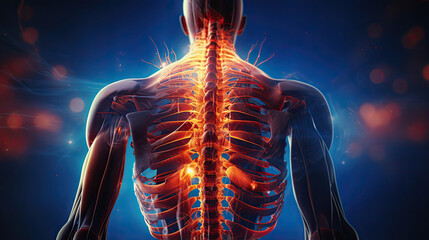
Anatomy and Physiology I is the first of a two-fully online course sequence. It is a study of the structure and function of human biology including cells, tissues and organs of the following systems: integumentary, skeletal, muscular, nervous and special senses. Emphasis is on interrelationships among systems and regulation of physiological functions involved in maintaining homeostasis.
Throughout the course, we will examine how systems are formed around a hierarchical organization from cells to tissues to organs. We will study the interactions of these complex systems, using evidence from morphology, histology, and physiology to build a better understanding of how human organ systems work. Throughout the course we will also look at new technologies and techniques to better explore the human body, and we will apply this knowledge to describing and explaining common pathologies.
Most students take BSC2085 (& then BSC2086) as well as the corresponding lab courses to fulfill prerequisite requirements to apply for specific health professional programs. This course includes 14 modules. The modules begin by examining important physiological and chemical principles related to histology and homeostasis. Then the course instructs students in the structure and functions of the skeletal and muscular systems. The rest of the course will examine the nervous and special sensory systems. The second sequential course BSC2086, will explore the physiology and anatomy of the remaining systems.
This module provides a broad introduction to the structure and organization of the human body. Students will learn about the levels of organization within the body, including cells, tissues, organs, and organ systems. We will focus on understanding anatomical terminology, including directional and regional terms used to describe body structures. Students will also explore the major organ systems of the body and their functions. Additionally, they will learn about the body cavities and their subdivisions, such as the cranial, thoracic, abdominal, and pelvic cavities.
In this module, students will study the four primary types of tissues in the human body: epithelial, connective, muscle, and nervous tissue. The structure, function, and characteristics of each tissue type will be explored, as well as their roles in maintaining homeostasis and supporting organ function. This will permit students to identify and differentiate between different types of tissues.
The integumentary system module focuses on the skin, hair, nails, and associated structures. Students will learn about the functions of the integumentary system, such as protection, temperature regulation, sensation, and vitamin D synthesis. The anatomy and physiology of the skin layers, as well as common skin disorders, will also be covered.
This module delves into the skeletal system, with a specific focus on bone and bone tissue. Students will study the structure and composition of bones, bone formation, and growth, as well as the functions of the skeletal system, including support, protection, mineral storage, and blood cell production. Common skeletal disorders and bone healing processes will also be discussed. They will learn to identify different types of bone cells and their roles in bone remodeling and repair. The module will cover the microscopic structure of compact and spongy bone, as well as the components of bone matrix and their contributions to bone strength and flexibility.
The axial skeleton module covers the bones of the skull, vertebral column, and thoracic cage. Students will learn about the anatomical features, functions, articulations and classifications of these bones. Topics will include the structure and functions of the cranium, facial bones, vertebral column, rib cage, and sternum. In addition, we will also discuss some diseases linked to the skull and vertebral column.
In this module, students will identify and study the bones of the appendicular skeleton, including the bones of the upper and lower limbs, as well as the pectoral and pelvic girdles. They will learn the names, locations, and functions of these bones, as well as their articulations with other bones. The module will also cover bone markings and their significance in muscle attachment and movement. In addition, will we cover some diseases associated with the appendicular skeleton.
This module focuses on joints, including their classifications, structures, and functions. Students will learn about the different types of joints in the body, such as fibrous, cartilaginous, and synovial joints. The mechanics of joint movement, range of motion, and the muscles involved in producing movement will also be covered.
For the lab portion, we will focus on the structure and classification of synovial joints. Students will learn about the different types of synovial joints, such as hinge, ball-and-socket, and saddle joints. They will study the components of a synovial joint, including articular cartilage, synovial fluid, joint capsule, and ligaments. The module will also cover joint movements and the muscles responsible for producing those movements.
The muscle tissue module introduces students to the three types of muscle tissue: skeletal, cardiac, and smooth muscle. They will learn about the structure, organization, and functions of each type. The module will also cover muscle contraction, energy metabolism, muscle fiber types, and the role of muscles in movement and posture.
For the lab portion, students will explore the structure and functions of skeletal muscle tissue. They will learn about the organization of muscle fibers, the role of sarcomeres in muscle contraction, and the sliding filament theory. The module will also cover muscle fiber types, muscle metabolism, and the neuromuscular junction.
In this module, students will study the muscles of the axial and appendicular skeleton. They will learn the names, locations, and actions of the major muscles in these regions. The module will also cover some of the main muscle attachments.
The nervous system module provides an introduction to the structure and functions of the nervous system. Students will learn about neurons, neuroglia, and the basic organization of the nervous system. Topics will include the classification of neurons, nerve impulses, synaptic transmission, and the roles of the central and peripheral nervous systems.
This module focuses on the anatomy and physiology of the brain and cranial nerves. Students will study the major structures and functions of the brain, including the cerebrum, cerebellum, brainstem, and diencephalon. They will also learn about the cranial nerves and their functions in sensory and motor innervation.
In this module, students will explore the anatomy and functions of the spinal cord and spinal nerves. They will learn about the structure of the spinal cord, spinal nerve roots, and the organization of spinal nerves. Topics will include spinal reflexes, sensory and motor pathways, and the relationship between spinal nerves and peripheral nerves. In addition, we will cover the four main plexuses, which are the cervical, brachial, lumbar, and sacral. Students will learn which main nerves belong to which plexus and their main functions.

0 COMMENTS
No comment found